 An official website of the United States government



Statistics for EPCs
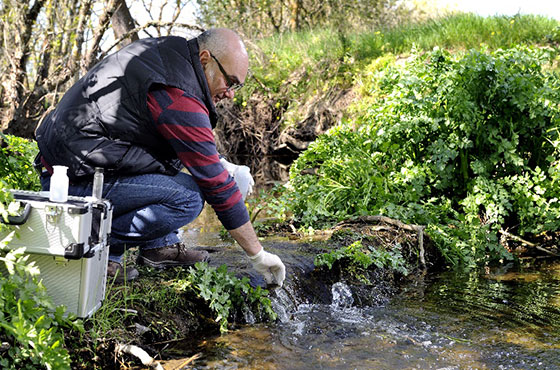
ATSDR recommends different statistics for EPCs depending on the way that samples were collected (discrete or non-discrete) and the characteristics of the dataset (sample size, number of non-detect results, distribution of the data).
The types of statistics ATSDR uses for EPCs include:
- Maximum concentration (discrete sampling)
- 95 percent upper confidence limit of the arithmetic mean (95UCL) (discrete sampling)
- Arithmetic mean (non-discrete sampling)
- Weighted mean (non-discrete sampling)
During this process, be sure to review the sampling design, and contact an ATSDR statistician through the ADS group if you need assistance estimating EPCs. Whenever feasible, it is key for ATSDR scientists to provide input to federal and state partners during the sampling design process.
The next two sections in this primer (Discrete Sampling EPC Calculations and Non-Discrete Composite Sampling EPC Calculations) talk more about the types of EPCs ATSDR uses, and how to decide which is most appropriate based on your sampling data.